DEALER & PROJECT GUIDE
How to Choose Aluminum Windows for North American Projects
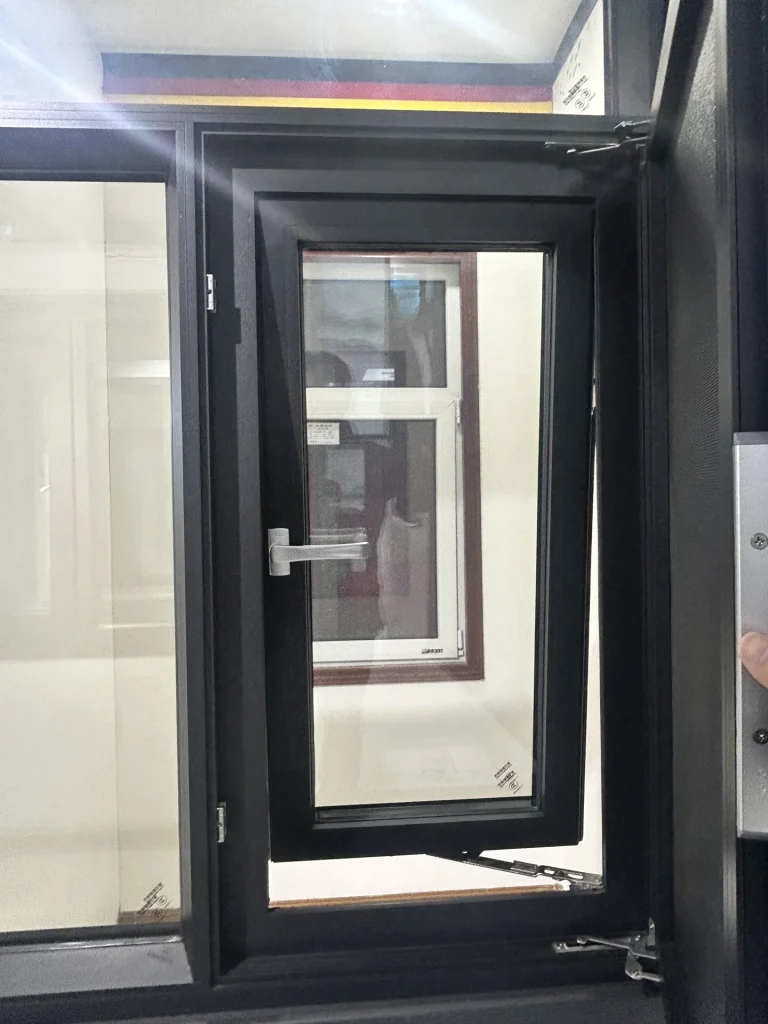
Youju 100 tilt-and-turn window — showroom sample.
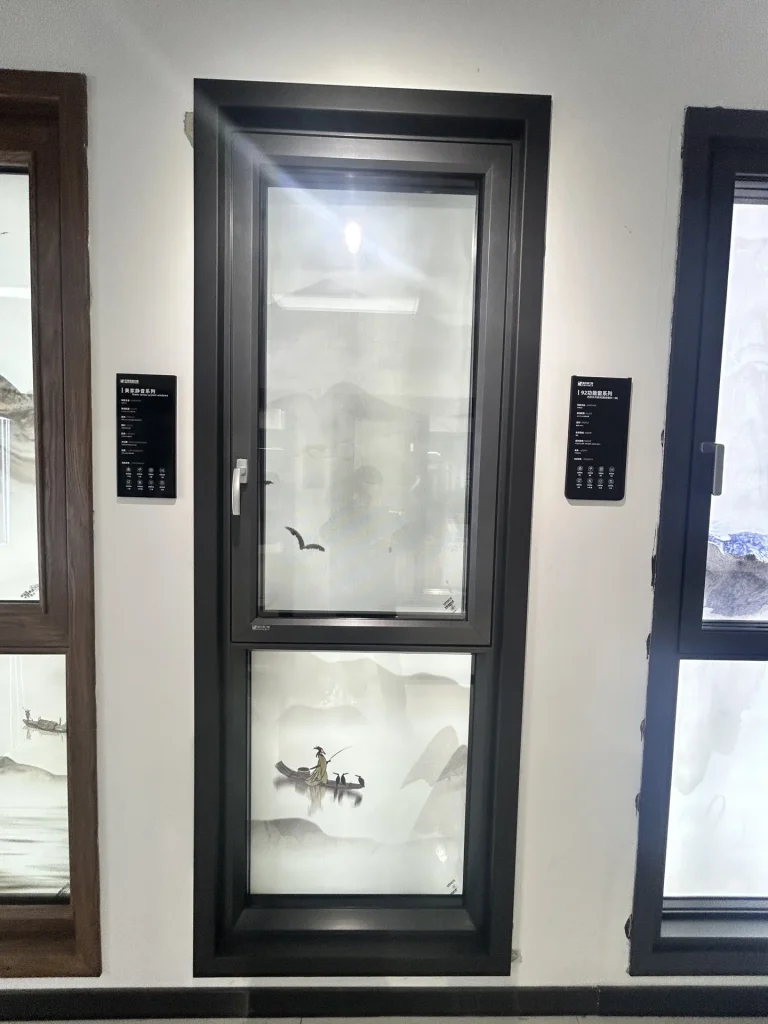
92 Series casement window with screen — showroom sample.
Choosing aluminum windows starts with understanding what your customers and projects need. For dealers, that means a product range with clearly defined configurations and a workable reorder process. For contractors and project buyers, it means matching each opening to the window schedule, installation details and required performance documentation.
When comparing wholesale aluminum windows, look beyond the series name and unit price. Opening style, glazing, screens, hardware and delivery scope all affect what you are purchasing.
This guide explains how to compare aluminum window systems and prepare a more useful quotation request for projects in the United States and Canada.
1. Start with the Project and Window Schedule
Before selecting an aluminum window supplier, prepare a short purchasing brief. Include the project location, building type, opening sizes, quantities and target delivery date.
Dealers should also identify the configurations they plan to offer repeatedly. A defined combination of opening style, finish, glazing and hardware makes samples and future orders easier to compare.
For project teams, assign an opening ID to each window and distinguish rough-opening dimensions from finished frame dimensions. Always state whether measurements are in inches or millimeters.
For example, an inquiry for “24 aluminum windows” leaves important questions unanswered. A window schedule showing each opening’s dimensions, operation, screen requirement and destination gives the supplier a clearer basis for pricing.
2. Compare Tilt-and-Turn and Casement Windows
The opening method affects ventilation, operating clearance and screen coordination.
Aluminum tilt-and-turn windows combine an inward side-opening position with an inward tilt position. Check the space needed for the sash, including clearance around blinds, furniture and interior finishes.
Aluminum casement windows use a side-hinged sash. Confirm whether the selected configuration opens inward or outward, together with its handle position and screen arrangement.
Delburg’s current aluminum range provides three systems to compare:
Opening method
Inward- or outward-opening casement
Inward- or outward-opening casement
Listed screen configuration
Screen included
Screen included
Use these differences to build your shortlist. Confirm the final frame, glazing, hardware and screen package in the quotation rather than assuming that every configuration within a series is identical.
3. Evaluate Thermal Break Aluminum Windows as a Complete Assembly
Aluminum conducts heat readily. A thermal break places an insulating material between the interior and exterior metal sections to reduce heat flow through the frame. The U.S. Department of Energy explains this principle in its guide to window types and technologies.
However, a thermal break alone does not establish the performance of the complete window. The frame, glass, spacers, seals and operating configuration must be considered together.
When reviewing energy performance information, understand these terms:
- U-factor: Indicates heat transfer. A lower value indicates better insulating performance.
- Solar Heat Gain Coefficient, or SHGC: Indicates how much solar heat passes through the product. A lower value means less solar heat gain.
- Visible Transmittance, or VT: Indicates how much visible light passes through the product.
The National Fenestration Rating Council explains these ratings and how they support product comparisons.
Ask whether a quoted value describes the complete window or only the glass. Confirm the units as well: U-factor may be expressed in U.S. customary or metric units. The project’s performance targets should guide the glazing discussion.
4. Match Technical Documents to the Selected Window
For North American projects, documentation should identify the product and configuration being evaluated.
Request information that matches the opening type, glazing, dimensions and assembly you intend to purchase. Where a project specifies NAFS performance, check the operator type, Performance Class, Performance Grade and tested size. These are the four elements described in FGIA’s guidance on specifying fenestration products.
A report covering another opening type or product configuration may not answer the project’s requirements.
Share your required ratings and documents early. This allows the supplier and project team to identify what evidence is available and what still needs review before order approval.
You can review Delburg’s certifications and technical documents and request information for the specific system under consideration.
5. Compare Wholesale Quotations on the Same Basis
A useful price comparison starts with equivalent specifications.
When requesting wholesale aluminum windows, confirm whether each quotation includes the same:
- Window dimensions, opening direction and quantities.
- Glass construction and any requested coatings.
- Frame finish and color.
- Hardware and insect screens.
- Protective packaging and opening labels.
- Spare parts and after-sales arrangements.
- Delivery destination and shipping responsibilities.
Dealers should discuss sample arrangements, minimum order quantities, branding options and repeat-order requirements. Project buyers should confirm drawing approval, production timing and any phased delivery needs.
Ask suppliers to identify assumptions and exclusions in writing. This makes it easier to understand why two quotations differ and which scope suits your order.
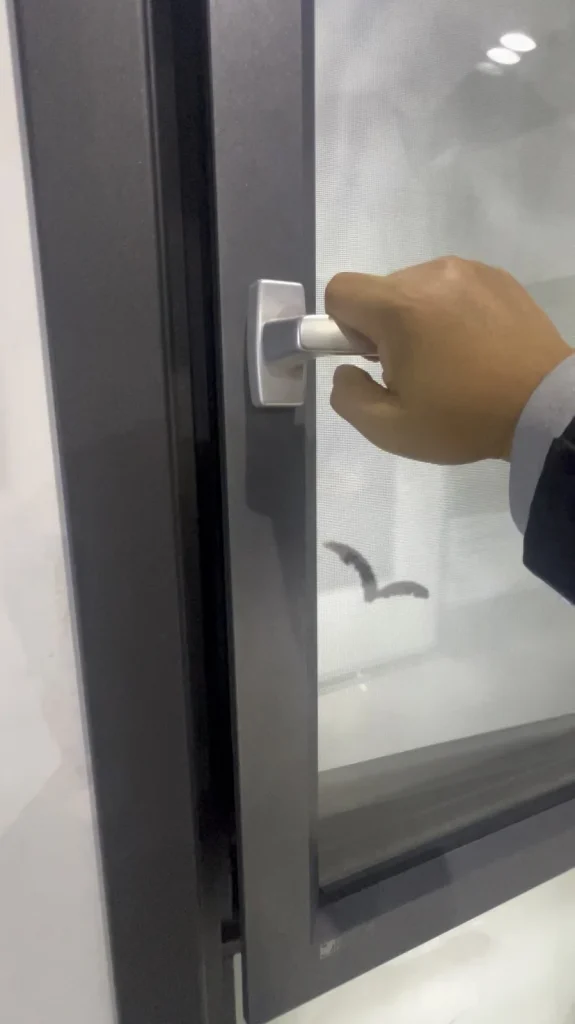
92 Series handle operation — confirm the selected hardware package.
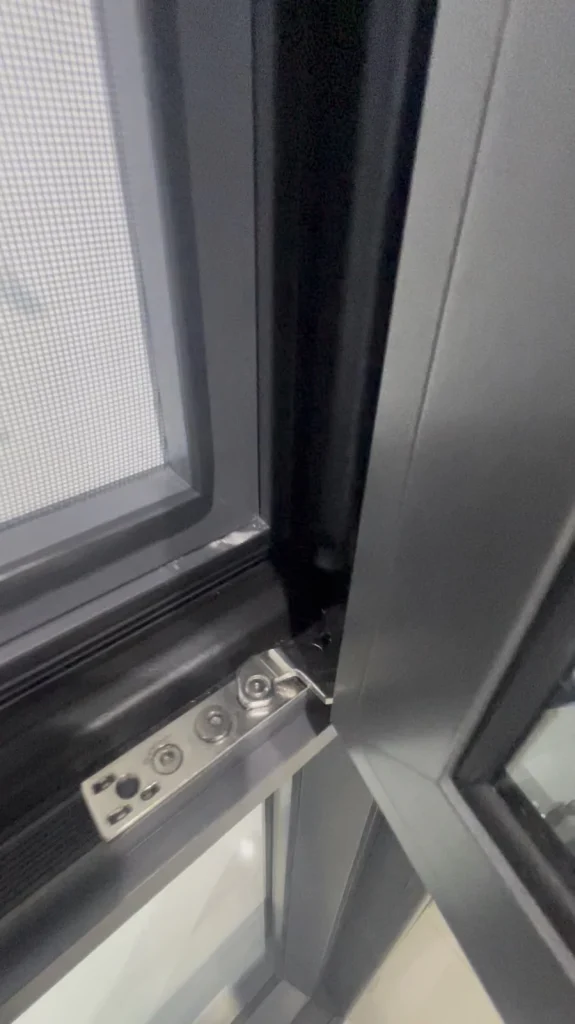
92 Series lower hinge and frame corner — showroom detail.
6. Prepare a Clear Aluminum Window Quote Request
To start a quotation review, send the following information:
Purchasing purpose
Dealer supply, a specific project, or both
Location
U.S. state or Canadian province, plus delivery destination
Window schedule
Opening IDs, width × height, measurement units and quantities
Operation
Tilt-and-turn or casement; opening direction where applicable
Glazing
Requested glass construction and performance targets
Finish and hardware
Color, finish, handles and screen requirements
Documents
Required drawings, ratings, reports or project specifications
Timing
Target delivery date and any installation phases
If the design is still developing, approximate dimensions can begin the discussion. Final manufacturing dimensions and configurations should be confirmed through the order review.
Frequently Asked Questions
What should dealers look for in an aluminum window supplier?
Look for clearly documented configurations, a defined sample process and written confirmation of order quantities, production timing, packaging and after-sales responsibilities. Discuss how future orders will reference the approved configuration.
Are thermal break aluminum windows automatically suitable for every North American project?
Suitability depends on the complete assembly and the project’s requirements. Review the selected configuration, applicable performance evidence and installation details with the project team.
What is the difference between Anju 80 and Youju 100?
Both are listed as thermal break aluminum tilt-and-turn systems. Anju 80 includes a screen in its listed configuration; Youju 100 does not. Compare their detailed specifications and confirm the final package when requesting a quotation.
Can I request a quote before the window schedule is complete?
Yes. Share the available dimensions, quantities, location and preferred opening styles to begin the discussion. Identify any details that remain provisional so they can be confirmed before production approval.
Explore Delburg’s aluminum window systems to compare Anju 80, Youju 100 and the 92 Series.